
Over the recent past, most contemporary dance work in India suffers from the affliction of politics always trumping physical language. Choreographers are entirely preoccupied with perfecting a standpoint rather than labouring at articulating a devised phrase of movement. It’s a can of worms boring through the entire ecosystem of this field. And within a performance landscape where classical dance happens everyday (ranging from the terrible to the terrific); a regular engagement with viewing contemporary dance performance and evolution feels rare. This rarity contributes to our collective delusion that the history of contemporary dance in the Indian context isn’t as long or short as the constituting of the cultural category of classical dance itself. In this mode, where contemporary dance is always presented as brand new, it sidesteps critique by having the right politics but the wrong moves. The overwhelming trend: ponderings on body autonomy, gender, and sexuality – ripe for excavating into movement vocabulary are instead translated into narratives of social justice for easy applause. The remedy isn’t to start from scratch or ignore it, as might be the want, but to remind the community of ways of making that avoid these pitfalls.
It falls upon a dance writer (a nearly extinct creature in this ecosystem) to dive into contemporary dance’s past, retrieve the ephemeral, and attempt to parse the process of its making. Not just to pull up but to reveal to practitioners in the present that the politics must power the physical expression.
*** *** ***
Seven bodies – six men and one woman – in various items of underwear slouch, shuttle and strut across a stage. This was my second encounter with Mandeep Raikhy’s choreographic practice at the Attakkalari India Biennial 2014, where he presented A Male Ant Has Straight Antennae. They move within the geometric grid of industrial scaffolding on the sulphur glow of a dance mat in its centre. Over 53 minutes, the movements are fattened, fashioned and forged through repetition into pulsing phrases of dance. It doesn’t just tell us that it is interested in scrutinising the spectrum of Indian masculinity, it shows us.
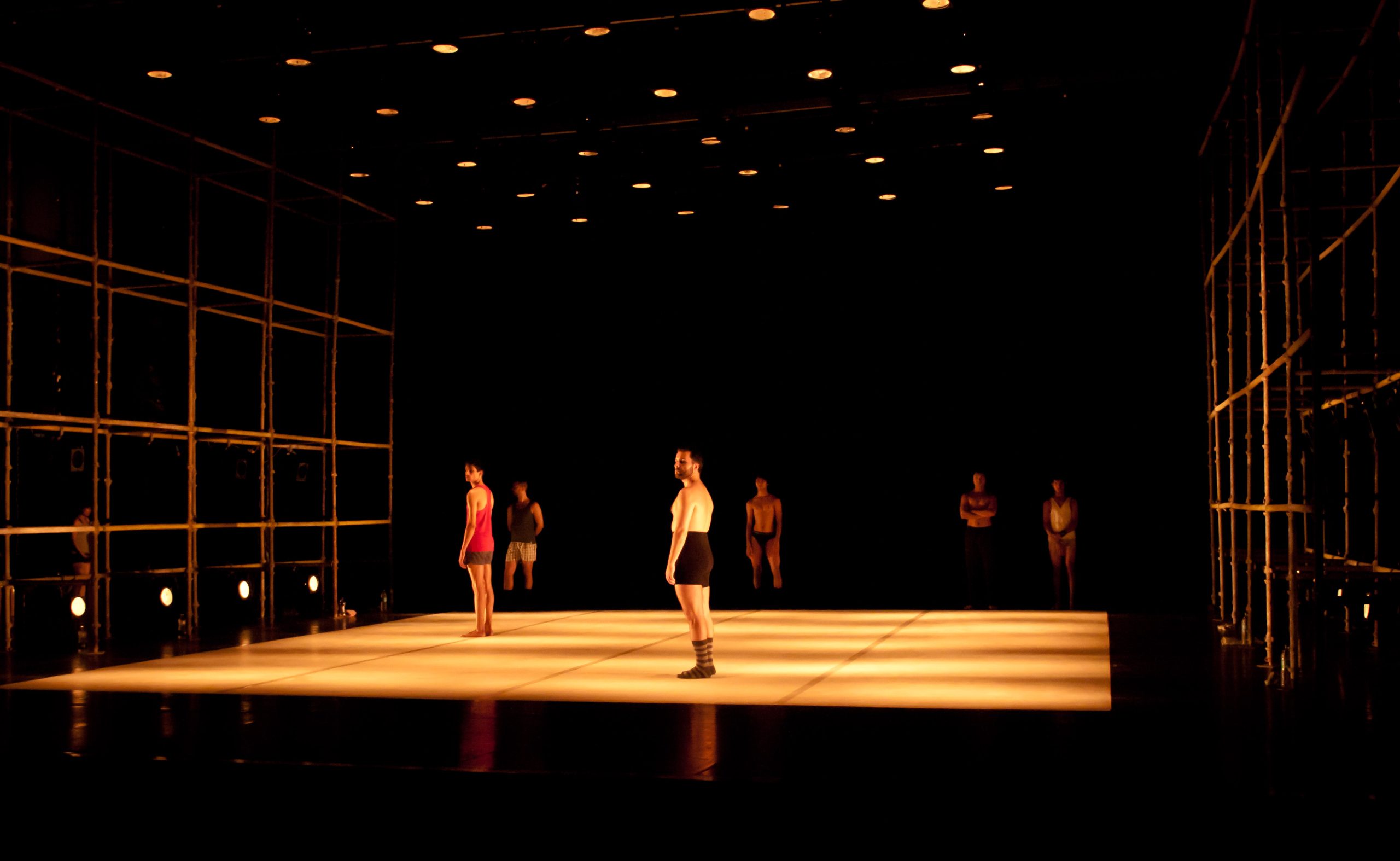
Figure 1: Still from A Male Ant Has Straight Antennae, Choreography, Mandeep Raikhy, Photo credit: Soumita Bhattacharya, Image Courtesy Mandeep Raikhy.
Over a telephone call, fittingly underscored by the clatter of construction work and the thrum of traffic, Raikhy describes the intentionality behind his sophomore work: The movement vocabulary was built on an impulse towards wanting “to identify the ways that different body parts held different notions of masculinity”. Taking this further, he asks: “What kind of masculinity did we hold in our wrists, chests or sternums? Where does masculinity sit in the muscle memory of each of our bodies? Was it in different body parts for each one of us?” In the studio space, along with his dancers, Raikhy employed these as springboards for the improvisational process before specific movements were constructed and then choreographed into sequences and scenes.
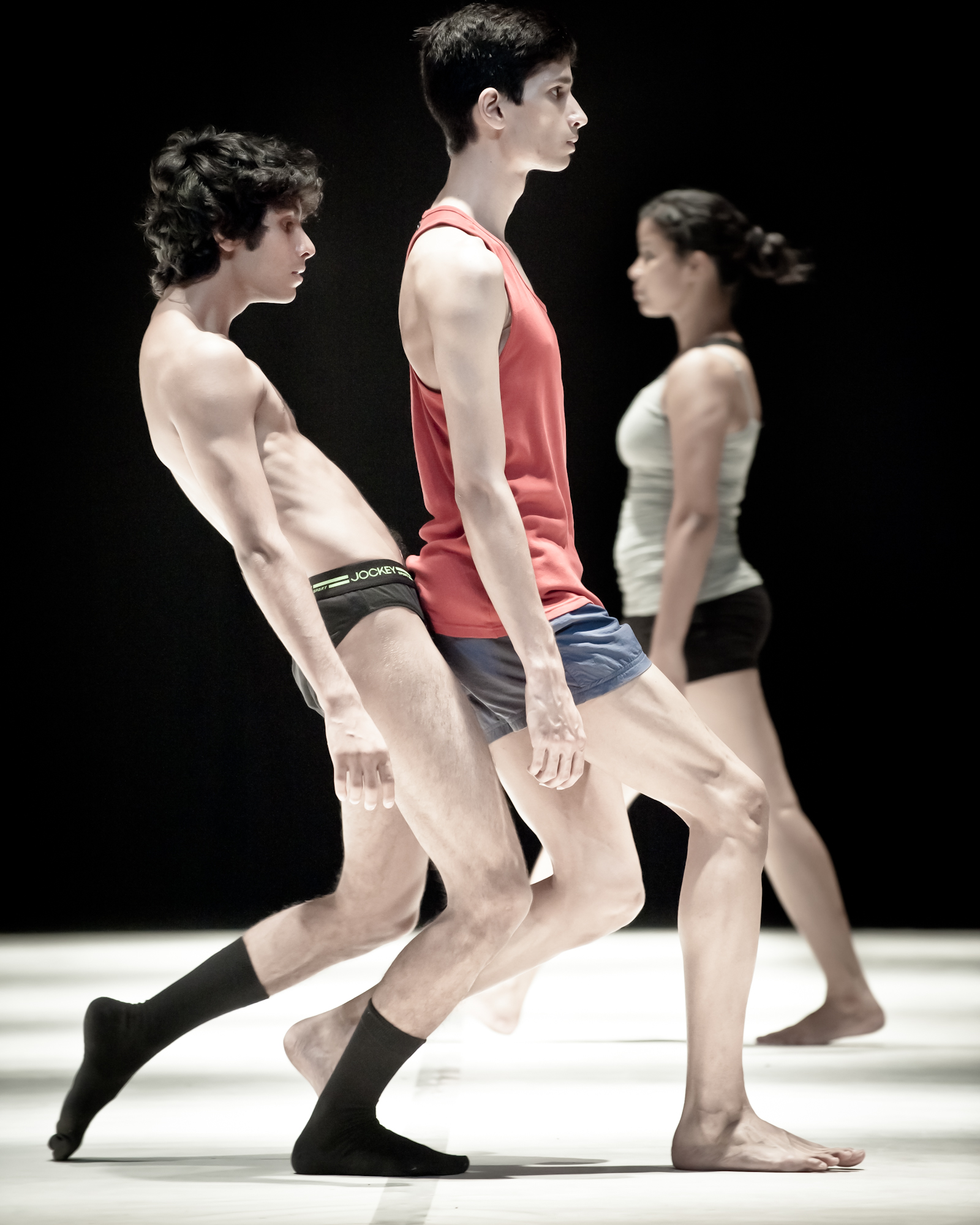
Figure 2: Still from A Male Ant Has Straight Antennae, Choreography, Mandeep Raikhy, Photo credit: Soumita Bhattacharya, Image Courtesy Mandeep Raikhy.
Raikhy attributes this impulse to use dance as “construction material” to the experience of “learning dance on the job” with the London-based Shobana Jeyasingh Dance Company. “In the mornings, we would have our bharatanatyam classes, and the afternoons were spent rebuilding, breaking it down, putting it upside down, or mixing up the movements,” he recalls. He believes “that this sense of play” was embedded into choreographic practice from this point on. He recalls working on The Ghost Ship (2008) – his second choreographic work – in collaboration with UK-based dancer-choreographer Phil Sanger. The work “a response” to Roland Barthes’ A Lover’s Discourse: Fragments “really excited them because of the nuggets” about the different components of love tackled in this book. He remembers being drawn by the “very physical images” in the text. “One of the fragments looks at the absence of a lover but as a kind of physical condition where it might feel like one’s head is being held underwater. Another was an eight-legged creature – emerging from the union of the two lovers and one can’t tell them apart; these were some of the physical representations” that were developed into movement fragments.
For Raikhy, reading Barthes’ text “which seemed to deliberately ungender” the roles of the lovers but represented them as interchangeable tropes catalysed and unlocked “a queer imagination of love”. And so The Ghost Ship played out these possibilities that queer love held through the movement between these two male dancers. “In way, this work – The Ghost Ship – is a precursor to Queen-size (2016), which had a more direct political framing as it was a response to article 377 of the Indian Penal Code [that criminalised homosexuality in India up until 2018]. While The Ghost Ship was not activism at all, actually.”
*** *** ***
Similarly Big Man, Little Drawings [2012] – Raikhy’s first choreographic work – could be read as the antecedent to A Male Ant Has Straight Antennae [2013]. While the former was a solo exploration of Raikhy’s own relationship with being Punjabi and its cultural notions of masculinity; the latter brought many bodies and their experiences together to unpack collective ideas of Indian masculinity. During rehearsal, Raikhy’s strategies, along with looking at the gestural performances of gender sitting in the muscle memory of each of the dancers, “which was different for each one of us,” he says. “We also looked at the ways these sites in the body threatened some of the notions of masculinities we had grown up with.”
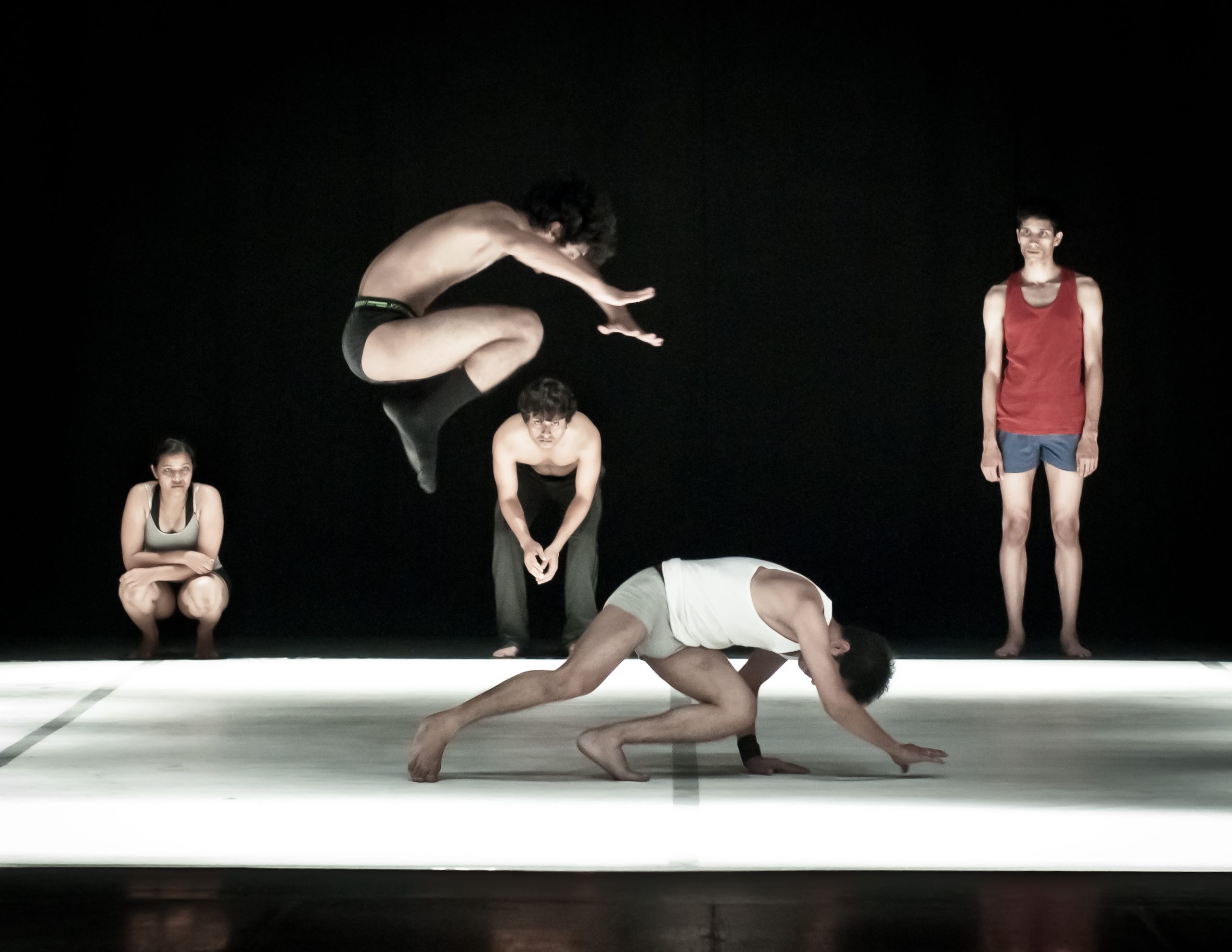
Figure 3: Still from A Male Ant Has Straight Antennae, Choreography, Mandeep Raikhy, Photo credit: Soumita Bhattacharya, Image Courtesy Mandeep Raikhy.
He kept the questions simple: “What wouldn’t you do in front of your father? A figure who for many of us has been upheld as the consummate expression of masculinity. What could we do with the doors of our bedrooms closed?” In this way, they began to use the different allowances, adjustments and accommodations that their bodies made in their expressions of masculinity as the building blocks to create the movements. “We looked at the walk. It’s functionality but also the act of walking and to propose just one change to the body. We worked at exaggerating one part of the body in a particular direction; dropping the pelvis forward or backwards, pushing the chest forward, pulling down the shoulders and so on to see if ideas of masculinity or femininity began to emerge from these anatomical departures,” he says. “We learned that even one of the new alignments changed the body and in this way different creatures with gender began to emerge.”
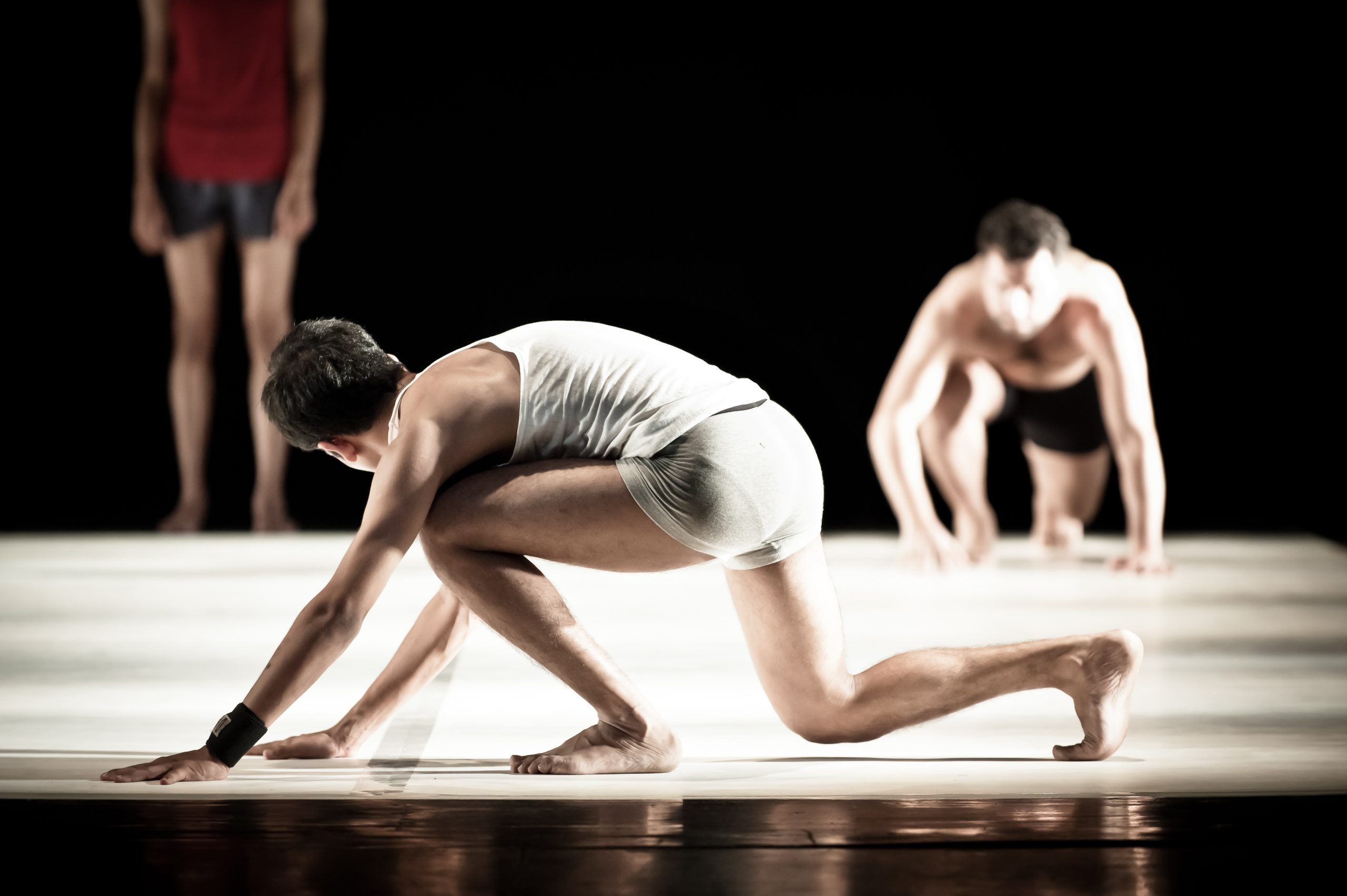
Figure 4: Still from A Male Ant Has Straight Antennae, Choreography, Mandeep Raikhy, Photo credit: Soumita Bhattacharya, Image Courtesy Mandeep Raikhy.
*** *** ***
There wasn’t a message in Raikhy’s early work, “it was a very direct experimentation with the gendered body,” he says. “Even with my experiments with Bharatanatyam [Inhabited Geometry, 2010], it was about finding the softness and sense of flow in this vocabulary which is really quite geometric with hard lines. How do I begin to find the circularity in this form that is quite angular? So, even before breaking down. It’s been important to experience masculinity in my body and then begin to disrupt it – it’s quite a considered process,” he adds. With a work like Queen-size, Raikhy admits, “I wasn’t looking at undoing gender in any way; that’s probably a critique of the work. Now when I look at it, to look at homosexuality without examining its relationship with gender was something I wasn’t ready to do at that point. Just looking at sexuality was an urgent desire. And now, I have begun to get comfortable with the different dancers bringing the gender to work with.”
In Raikhy’s early works, the gendered body was at the centre of his choreographic enquiries. And from Queen-size, it’s become more an investigation into the expression of that gender “like the desire that extends from somebody’s body”. In a sense, Raikhy sees his early works as coming from “an autobiographical space” and needed to “be resolved through the body”. But over time, he has pulled away from “his own sort of urgent desires” and has begun to look a little bit more into the ways that the different bodies could bring into the process “even if work might start with my own concerns”. And presently, his works “aren’t so much about questions emerging from his own body” but tackle larger ideas “around the framing of the body” in our contemporary contexts.
But this progression speaks to the evolution of Raikhy’s choreographic sensibilities, it doesn’t read as reactive. “Even if I strip away the political ideas of Queen-size, it is a study of intimacy at a formal level or with Hallucinations of an Artifact [2023], it was an investigation into the tribhanga and not just the Dancing Girl figurine from the Indus Valley civilization,” he says. This is important for Raikhy that he imagines work where “the political or the asking questions is done through finding a form for those ideas through a set of exercises, codes, and rules” and the gap is that lately, contemporary dance work “seems to speak more than embody”.
In its present-day mode as social justice warrior, contemporary dance seems to present the body always on the receiving end of violences and constraints. It isn’t channelled into conveying the textures of being. If queerness is the daily search for a way of choreographing our bodies within this world; then it must “bring some agency back into the body” in contemporary dance too.