
On a road trip to Ladakh last year, I learnt about “suture zones” during a conversation over dinner with a mutual friend, a research scholar studying geophysics. In geology, a “suture zone” is a place where two tectonic terrains meet, i.e. an area where chunks of Earth’s crust push into each other. Later that night, I found myself gazing at the stars under the pitch-dark skies of Hanle, a small village in Eastern Ladakh. Amidst the moon-like landscape, in a place that ranks highest on the Bortle scale, a measuring unit for the darkness of skies that indicates light pollution levels, as I hoped for visions of a celestial communion above my head, my thoughts turned to the mysteries under my feet.
Over centuries, distinct fragments of the Earth’s crust collide and eventually join to form one landmass. How strange and wondrous, the forces and the ecological phenomena that pulled together the Indian and Eurasian tectonic plates, a binding of separate, distinct landmasses. Folding, faulting, mountain-building — this is the grand planetary plot, which, in a way, brought forth the sub-continent, as we know it today.
These ruminations on Ladakh’s geoheritage sites got grafted onto the memories of my visit to the Central Asian Museum. Built in the historic Tsas Soma garden, a former caravanserai ground, the space is an ode to Leh’s past as a trans-Himalayan trading hub. However, it was the moment I stood atop the top floor, overlooking a mosque, a gurudwara, a chorten (Buddhist stupas) and the Leh Palace that I realised the region’s “sutured” cultural past. One could witness the grandeur of the vast wrinkled mountains of the Karakoram range and the syncretic fabric of Leh old town at the same time.
For a visitor like me, the conventional perception of Ladakh is largely influenced by the presence of tourism and the militarisation of border regions. It is also, like many others, shaped by films and music. In his critique of the trope of mountain love songs in Bollywood, ‘Sex in the Snow: The Himalayas as Erotic Topos in Popular Hindi Cinema,’ Philip Lutgendorf examines the subversive depiction of Ladakh in the song Satrangi Re in Mani Ratnam’s Dil Se. He describes the last visual of the song sequence as an image that is at once a Pietà and a Liesbestod, and that prefigures the film’s grim finale and the lyric,” gesturing towards the conflicts and violence that exist beyond idyllic vistas and romanticised landscapes in mainstream Hindi cinematic narratives.
Renowned Ladakhi writer and historian Abdul Ghani Sheikh portrays the effects of Partition, war, tourism and development in Forsaking Paradise: Stories from Ladakh. Written in Urdu and translated by Raveena Aggarwal, his anthology of fictional short stories is a minute observation of Ladakhi society. The cosmopolitan legacy of the caravan routes during the Silk Route trade and the colonial past, followed by the Partition of 1947, which brought the border separating families and fracturing friendships, and finally the post-liberalisation era with its materialist consumerism and the influx of bureaucratic and military powers in proximity with deep-rooted beliefs of the largely Islamic and Buddhist society.
“Ladakh often appears in the popular imagination of mainland India within either the framework of nationalism and conflict, or monastic spiritualism,” writes Abeer Gupta, curator and director at Achi Association India, in Arts in the Margins of World Encounters. Beginning with a volunteering stint at The Students’ Educational and Cultural Movement of Ladakh (SECMOL), an organisation located at Phey village and founded in 1988 that led educational reforms instrumental in bringing alternative learning to the educational system of Ladakh, Gupta’s background in visual anthropology and filmmaking led him to engage with the burgeoning arts and cultural scene in Ladakh.
“Is there a Contemporary in Ladakhi Art” – an exhibition curated by Abeer Gupta in 2022 at the India International Centre, New Delhi, was significant in that it foregrounded questions of contemporaneity, connecting the art practices of five Ladakhi artists working with a range of mediums. The curation was an outcome of the Curatorial Intensive South Asia (CISA) 2021, an initiative of Khoj International Artists’ Association and Goethe-Institut / Max Mueller Bhavan, proposing the conceptual formulation of “Ladakhi Art” as a composite entity. t.
Over a phone conversation, Gupta mentions how the exhibition was the outcome of decade-long interactions and engagements with the community in Ladakh. He also draws parallels between the contemporary Tibetan art movement and its path to a ‘secular modernism’, citing the works of art historian Claire Harris, and the developing ethos of the current generation of Ladakhi artists who are negotiating new narratives through their practices.
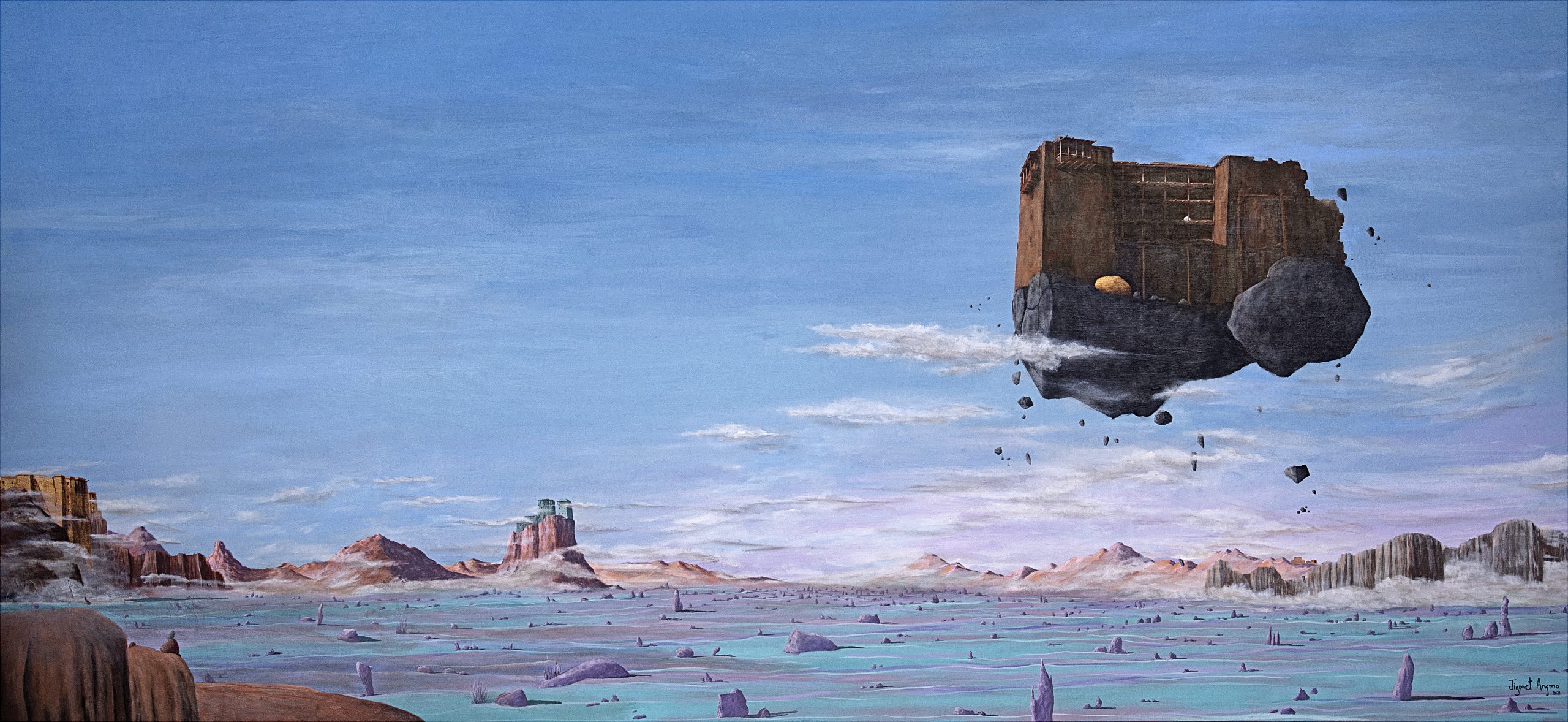
Fig 1: Jigmet Angmo Nakpo Lchags ay Khar, (The Black Iron Castle) Medium: Acrylic on canvas, Size: 3.5 ft x 6.5 ft. Image courtesy of the artist.
This is evident in one of the exhibited paintings titled ‘Nakpo Lchags ay Khar’ (The Black Iron Castle) by Jigmet Angmo, which is based on an episode from the Epic of King Gesar. The heroic tales of Gesar, a quasi-divine warrior, originate in the oral storytelling traditions of Ladakh, Tibet and across Central Asia. While many variations of the epic exist, Jigmet’s inspiration comes from an episode featured in one of the retellings by legendary musician Morup Namgyal. The ‘Black Iron Castle’ depicted in her painting, floating miles above ground on the canvas, is a myth about a demon-hunting hero translated onto the canvas.
While the allegory in her art is intrinsically connected to local Ladakhi culture, the impossible, deep turquoise of the high-altitude sky in the painting evokes the surreal landscape of her home, merging geology with the mythic cosmos of Ladakhi oral literature. Among the leading artistic voices from Ladakh, Jigmet has also exhibited at the sā Ladakh Biennale, Gallery Ragini, among others.
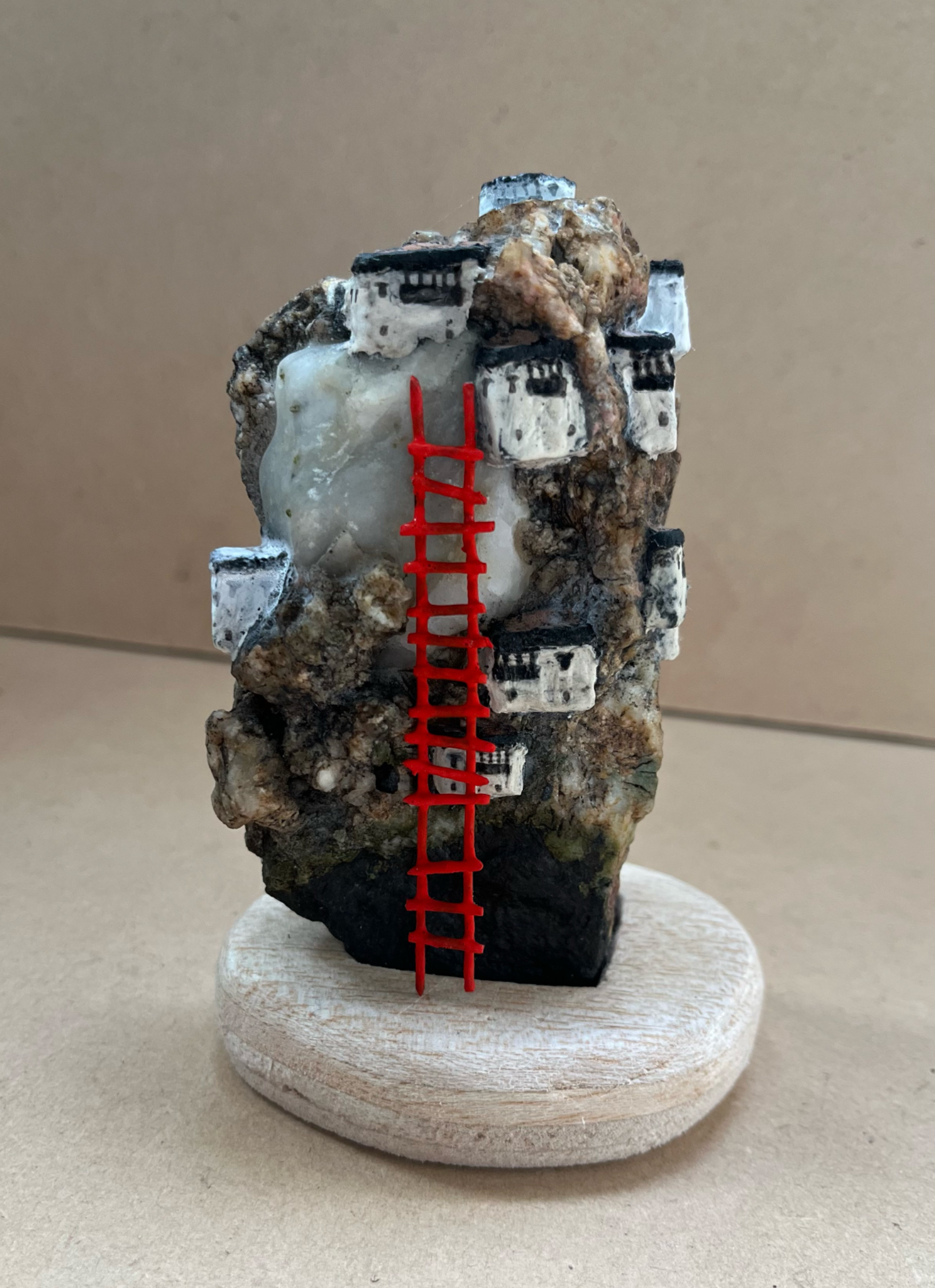
Fig. 2: Jigmet Angmo, Kumik, Medium: Mineral, crystal, clay, limestone powder and soot pigments, and armature wire. Size: 11 x 5.5 x 3 cm. Image courtesy of the artist.
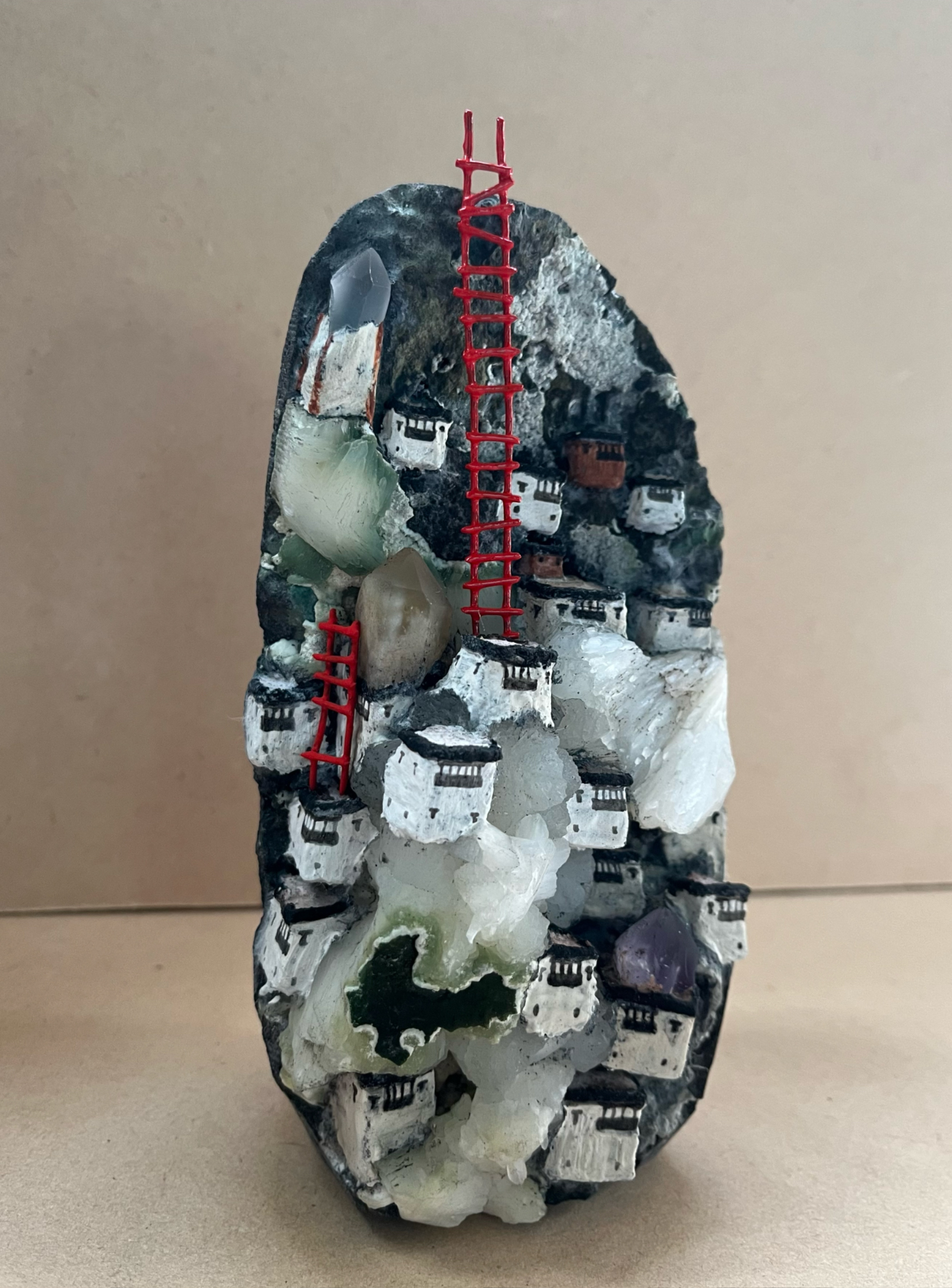
Fig. 3: Jigmet Angmo, Serthi, Medium: Mineral, crystal, clay, limestone powder, red oxide and soot pigments, and armature wire. Size: 16 x 6 x 7.5 cm. Image courtesy of the artist.
Home and the landscape of Ladakh are also recurring motifs in the works of Skarma Sonam Tashi, a visual artist from Kargil who recently won the National Award at the 64th National Exhibition of Art for his artwork titled “My Homeland – 3,” a sculpture made using recycled material and natural pigments. His sculpture Echoes of the Mountain was part of the group exhibition, ‘Sculpture 2025,’ curated by Rajendar Tiku and designed by Rajat Sodhi at Gallery Espace, showcasing the presence of Ladakh in contemporary sculptural practices in India. Bringing Ladakhi art to a global stage, he is one of the five artists featured in the National Pavilion of India, curated by Dr Amin Jaffar at the 61st Venice Biennale – In Minor Keys by Koyo Kouoh.
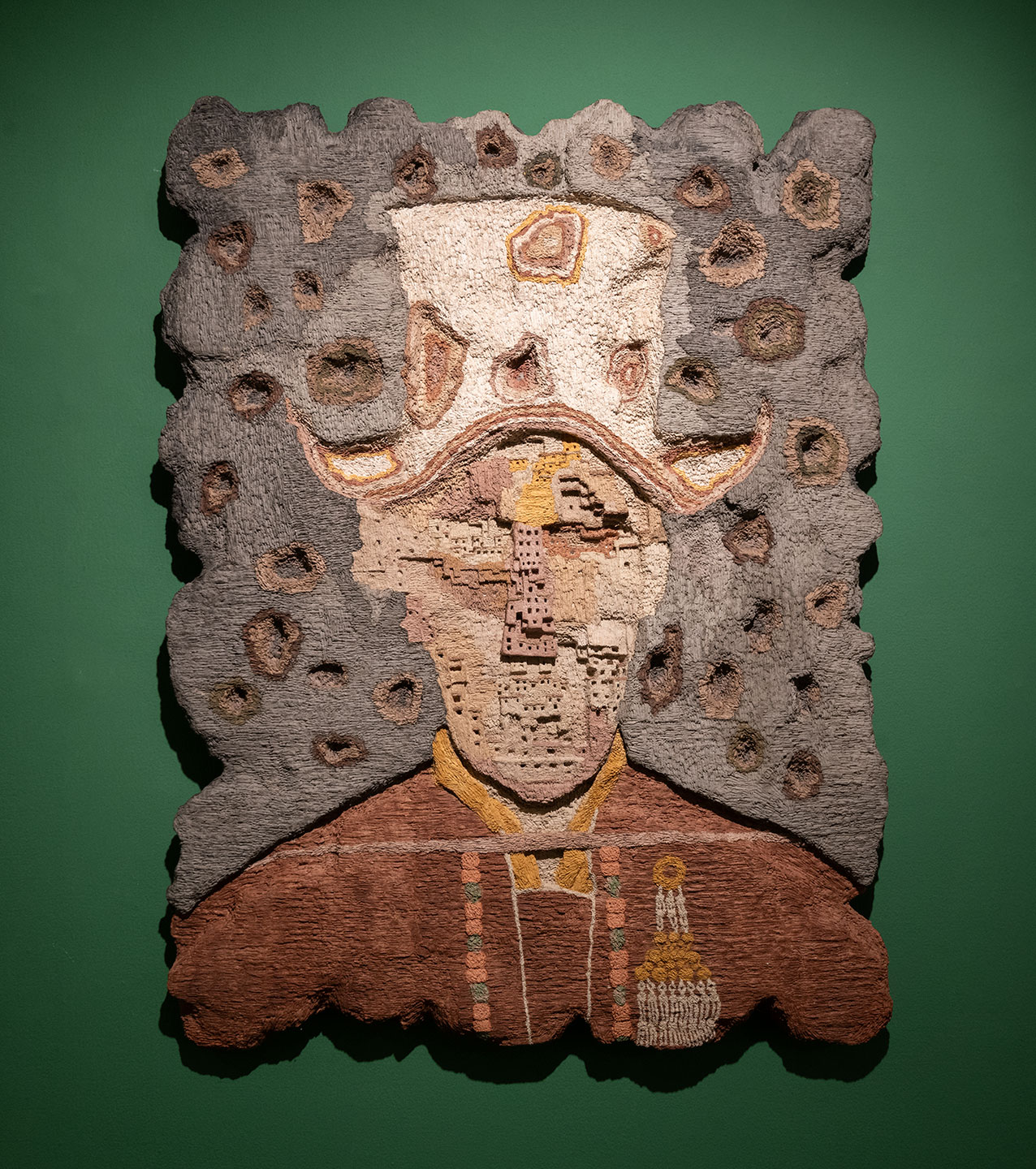
Fig. 4. Skarma Sonam Tashi, Echoes of the Mountain, 2025, Cardboard, paper-mache & natural pigments
Jigmet Angmo, Skarma Sonam Tashi, Tsering Motup, Tundup Churpon, Ayan Biswas, along with other Ladakh-based artists, and others connected to the larger Himalayan region, were also part of the inaugural show A Desert Meets a Forest at Arthshila, Goa (December 2024 – February 2025), curated by Latika Gupta. The show played a crucial role in highlighting conversations about the Himalayas and the communities that depend on the mountains. Moving beyond state borders and nationalist discourse, the show shed light on the growing interest in one of the most crucial landscapes affected by climate change.
The ecological turn in contemporary Ladakhi art features prominently in the artistic works of Anuja Dasgupta, a Ladakh-based multidisciplinary artist and agripreneur. Dasgupta calls herself a “self-taught or accidental artist.” Her experience as an educator while working as Associate Director at the Naropa Fellowship, and as the co-founder of Ladakh Orchards, a social enterprise to promote traditional agricultural practices and products of Ladakh, deeply informs her practice and her desire to highlight the dire consequence of human interferences with fragile ecosystems. Her book series of four velvet-cloth covered hand-bound books titled ‘Four Full and Accurate Accounts on Ladák’ (2018), each titled (I) Geography, (II) Mountains, (III) People, (IV) Religion, was a collaborative project, created with the students of Lamdon Model Senior Secondary School Leh, responding to the surveying Western imperial gaze of colonial text ‘Ladák: Physical, Statistical, and Historical’ (1854) by British army engineer Alexander Cunningham which was steeped in the epistemic violence of imperialist authorship.

Fig 5: Anuja Dasgupta, Four Full And Accurate Accounts of Ladák, 2026, Installation view. Image courtesy of the artist.
In her recent artwork, ‘རི་(Rē)Frame’, for the third edition of Sustaina India (2026), a collaborative initiative by the think-tank Council on Energy, Environment and Water (CEEW), curated by artist-duo Thukral and Tagra, showcased in New Delhi—the puzzle pieces of a board game become an interactive and sensorial homage to the theme of ‘Bitter Nectar’. The installation is made from repurposed poplar wood, an apt medium of both symbolic and ecological importance, since these trees are tied to the local landscape and vernacular architecture of Ladakh. The seasonal production cycle of the apricot, from white and pink blossoms that bloom in spring to the golden harvest of autumn, the installation panels are etched using the pyrographic technique or woodburning. The catch is the fact that the more you play with the pieces, the wood chafes and the artwork is slightly closer to disintegration, a simple yet profound material analogy for the Anthropocene.
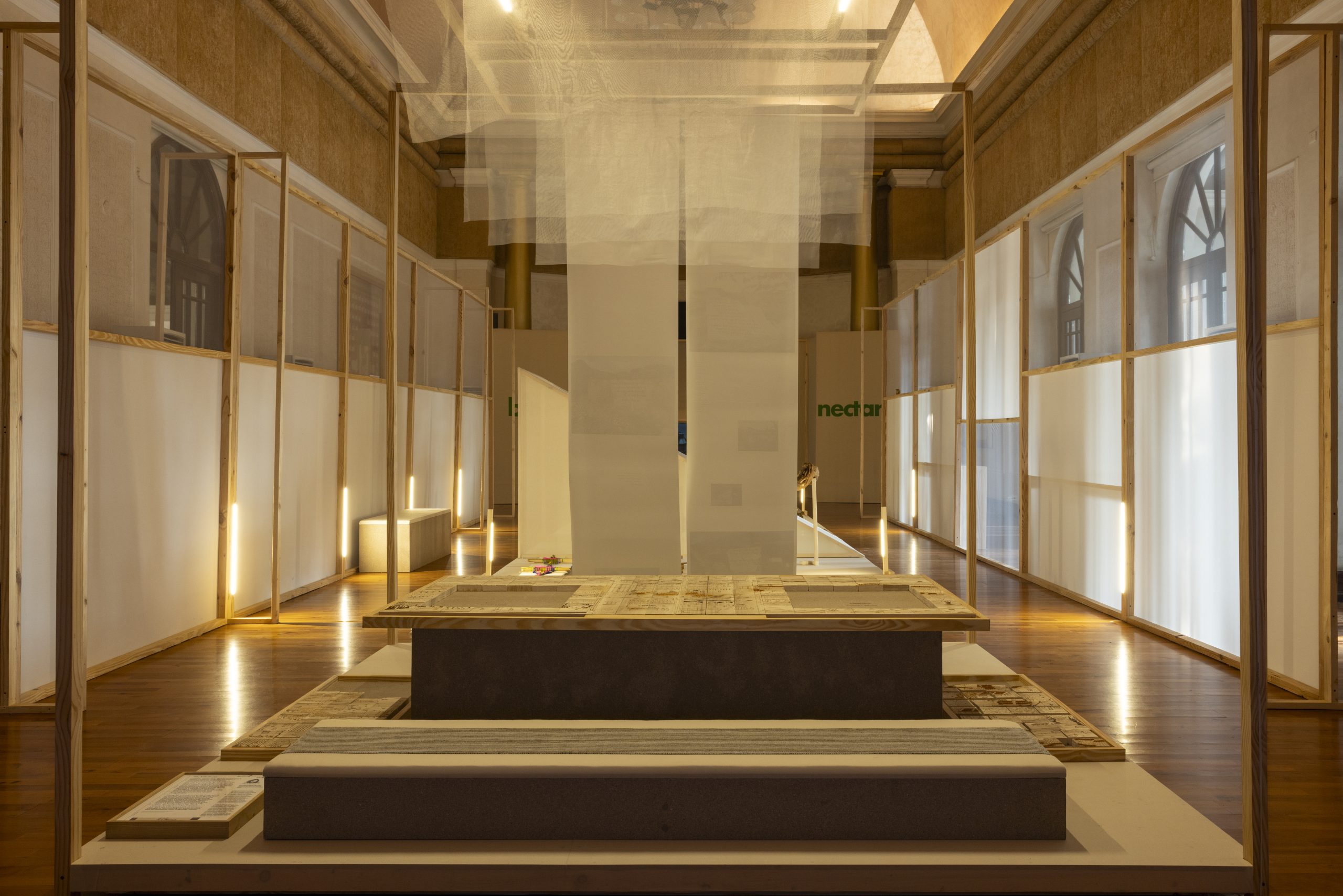
Fig 6: Anuja Dasgupta, རི་(Rē)Frame, 2026, Installation view. Image courtesy of the artist.
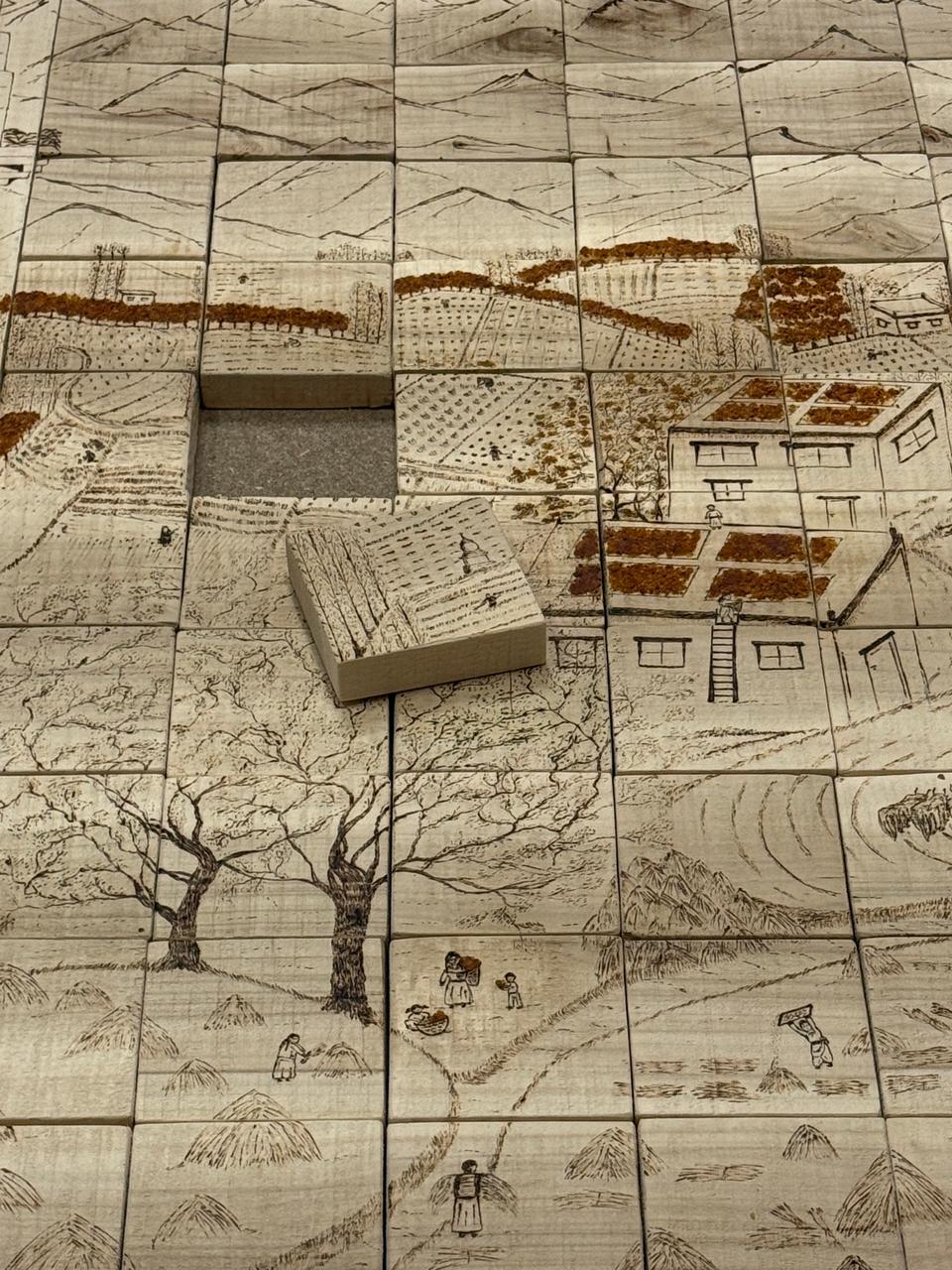
Fig 7: Anuja Dasgupta, རི་(Rē)Frame, 2026, Installation view. Image courtesy of the artist.
Climate change and its implications is another recurring motif in the works of contemporary art practitioners from Ladakh, who along with inheriting the cultural legacy of the past are also grappling with the precarity of the future in the age of global warming, melting glaciers and floods.
Tsetan Angmo, an NID alumni and recipient of the second edition of The Himalayan Fellowship for Creative Practitioners by FICA, showcases the anxieties of changing weather patterns through her short stop-motion experimental film titled, Memories of kha. When I asked her about the challenges faced by young artists from Ladakh, she mentions that even though an artistic career was not a viable option for many in her generation while growing up, a burgeoning community of creative platforms and community initiatives help nurture artists to pursue their art. She also explained how access to the internet has brought people closer to information regarding opportunities, even facilitating collaboration and the forging of networks.
Organisations like the Achi Association India and Ladakh Arts and Media Organisation have been instrumental in this new wave of artistic expressions from the land of high passes. In the absence of any government-sanctioned art college, gallery or institution, the community has resorted to archiving and museum-making as a way of preserving their stories. The Balti Heritage Museum and Culture Centre in Turtuk and Unlock Hunderman: Museum of Memories are important consequences of this cultural renaissance.
While contemporary art may be a new phenomenon in Ladakh, the art of storytelling is woven into the very fabric of Ladakhi existence for centuries. Chef and entrepreneur Kunzes Angmo infuses narratives into recipes through curated food experiences. Shedding light on the culinary heritage of Ladakh and trans-Himalaya is a way of “making memories out of a meal”, she says.
Similarly, Yige Publications, an initiative by Rigzin Choden, who studied lithographs published by Moravian Churches during her PhD in JNU, is bringing new life into Ladakhi literature. She works with Ladakhi writers and commissions local artists to illustrate book covers in order to bring back book reading culture. The Leh-based imprint has already published 10 titles focusing on Ladakhi literature, including children’s books and poetry.
From its status as an aristocratic regional power to the later oppressive Dogra rule, and consequently the post-Partition lived realities of Ladakh and its current demand for sovereignty, Ladakh has seen major socio-political shifts in the past couple of centuries. The contemporary art practices in Ladakh are deeply embedded in the region’s rich history and majestic landscape, a shared collective motif, while also being shaped by individual experiences of identity, migration and more.
To conclude, I return to my ruminations on the “suture zone” of Ladakh. As the newly formed Union Territory of India, notions of tradition and modernity, legacy of a complex past and aspirations within an unknown future, contemporary Ladakhi art is a space rife with movement, collisions, subductions and fusions, much like the geomorphological history of a suture zone to forge an outlet for contemporary art from Ladakh.