
This personal essay takes a long view of the artwork of Sunil Gupta and Chitra Ganesh, two diaspora artists whose articulations of queer existence foreground a compelling range of aesthetic and socio-political concerns. I reflect on their practice, curating some of my own writings, and responses over the last two decades.
My engagement with the work of Sunil Gupta—and, more broadly, with the critical force of his photographic practice within queer visual culture in India—preceded my encounter with the work of Chitra Ganesh. This was despite having been introduced to Ganesh socially through shared circles in Mumbai prior to meeting Gupta. As a young queer art writer in the early 2000s, I was myself in the process of negotiating the terms of visibility, self-articulation, and political subjecthood within the metropolitan context of Mumbai. This period, marked by both personal and collective urgencies, proved to be a formative moment—intellectually, affectively, and politically—shaping my understanding of queer practice and its intersections with contemporary art discourse in India.
The depth and intensity of Gupta’s photography, both documentary as well as art, gripped me hard, and in that respect created a precedent for my contemporary understanding of the queer movement. In those years, I found the images on display at the Aditya Ruia Art Gallery (which has currently closed down), a mixture of tender photographic homo-erotic fantasy and hard-core documentary artwork that recorded the early struggles of reading down section 377 that criminalised even consensual homoerotic practices. It is important to note that there wasn’t even a conversation at that time about women loving women, feminine power, or the politics of asexuality. Meeting Sunil Gupta and further discussing his status as HIV positive was invigorating, and while he is a diaspora artist who grew up in Canada and the US, it did not change the fact that he chose to show his work in India at a time when it was hardly conducive to be out and queer.
Writing about Gupta’s work posed its own set of issues, as I later found out. Especially when one began to consider the body of work that documented the queer population of New Delhi. Many of them were in different stages of being out, and while displaying photographs in a gallery attended by the intellectually elite was one mode of visibility, images being published in the broadsheet of a national newspaper was quite a different matter, for it touched upon visibility in the more public and popular echelons of middle-class drawing rooms, homes, as well as streetcorners where the papers were hawked.
There were instances where my writing about Gupta’s exhibition at the time was said to have ‘outed’ some of those who posed for these photographs. Titled ‘Exiles’ and ‘Mr Malhotra’s Party’, the two bodies of photographs consisted of constructed (or staged) photographic portraits accompanied by short texts that pushed the boundaries of documentary tradition to explore hidden experiences of gay men (Exiles), and queer people (Mr Malhotra’s Party), in Delhi, India. The men featured in Exiles were often not “out of the closet”, leading secret sexual lives under the punitive force of Section 377 that criminalised homosexuality, a law introduced during British rule in 1861 and only repealed by the Indian Supreme Court in 2018.
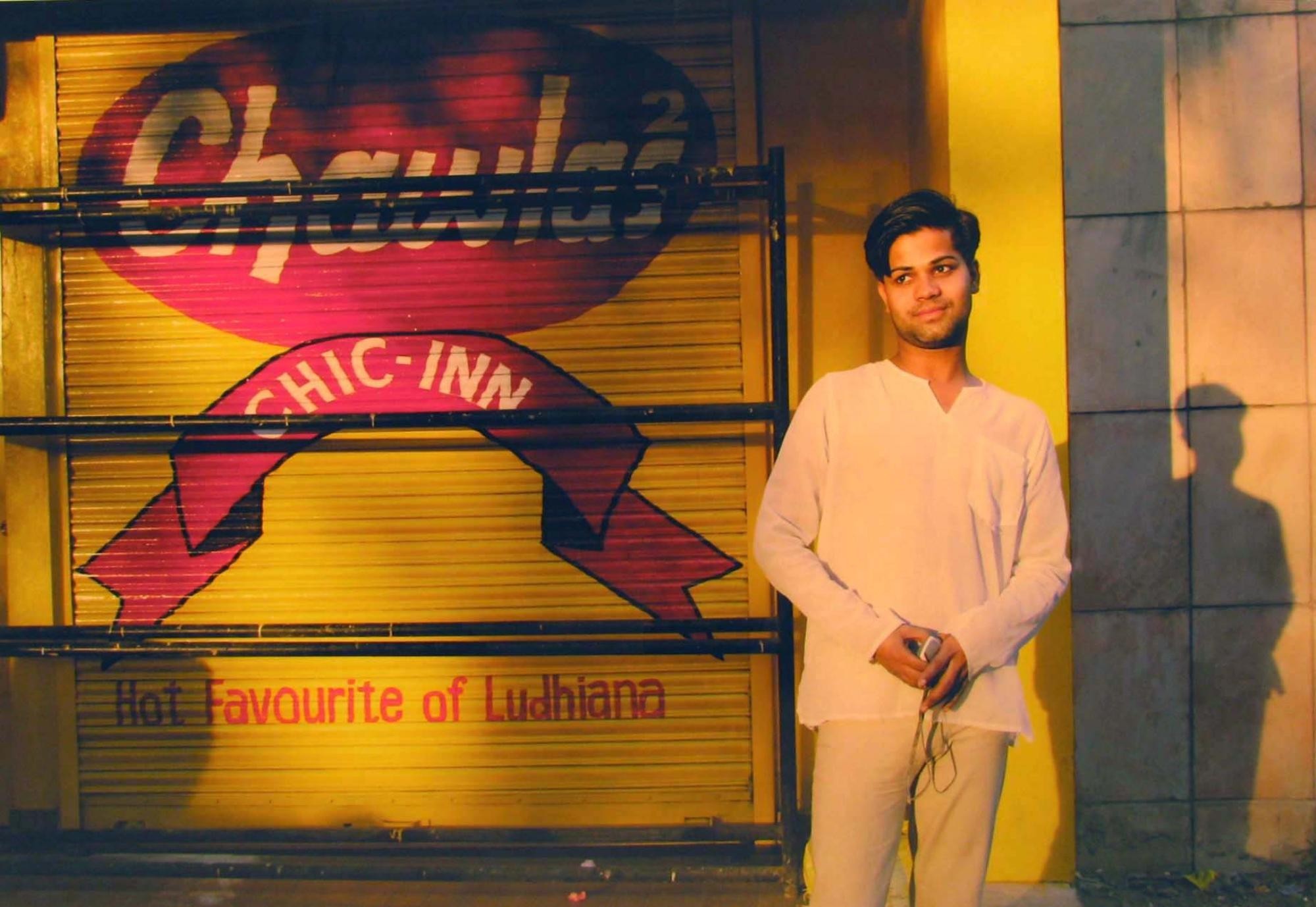
Fig. 1: From the series Mr. Malhotra’s Party, Sunil Gupta. Image courtesy Sunil Gupta and Vadehra Art Gallery.
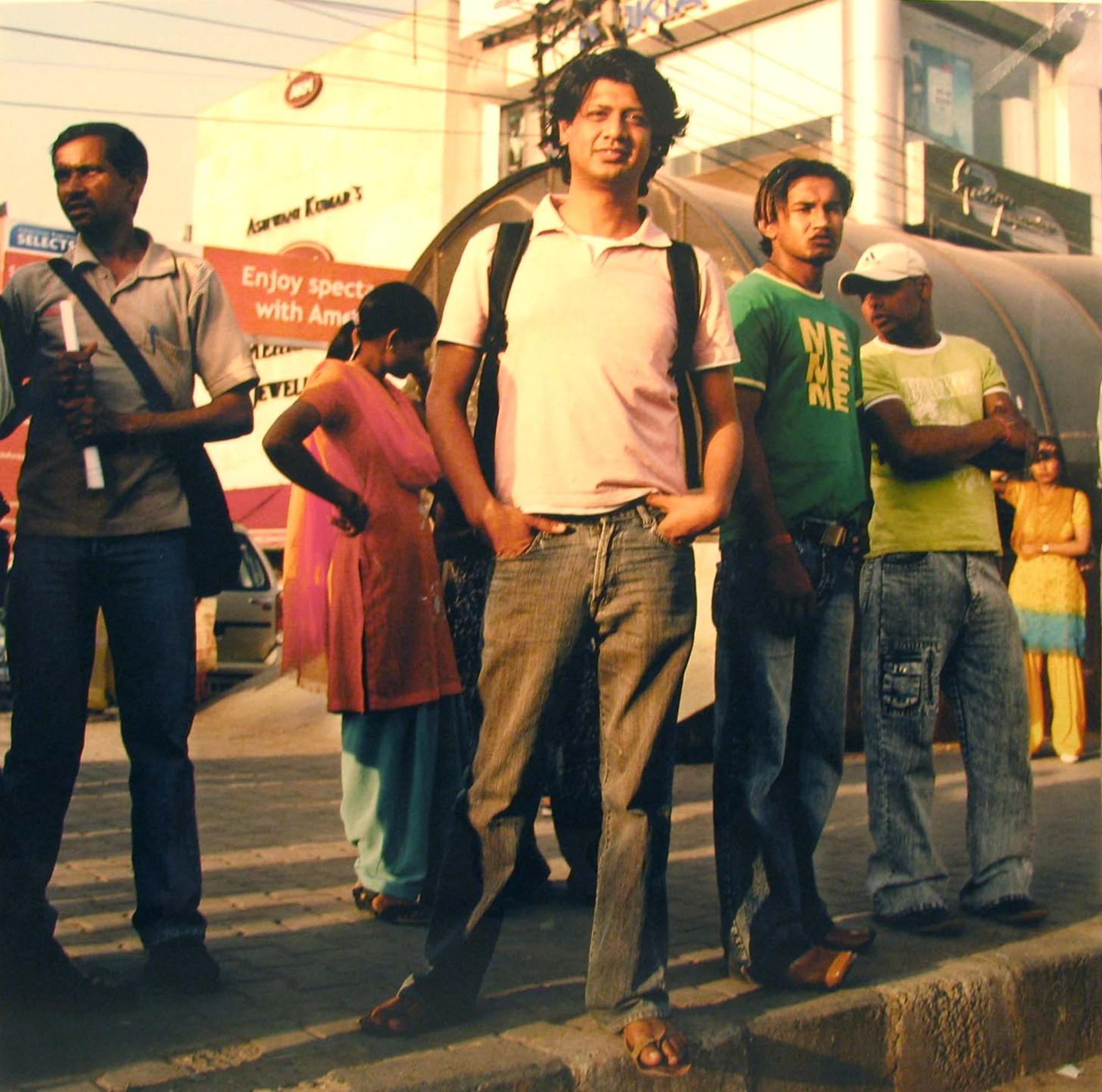
Fig. 1: From the series Mr. Malhotra’s Party, Sunil Gupta. Image courtesy Sunil Gupta and Vadehra Art Gallery.
In documenting these men, Gupta also aimed to challenge other colonial legacies: the historic silence of art history on sexual dissidence outside the West, and the tradition of Western photographers speaking for Indian culture and people in the work they made. However, Gupta despite his intentions, faced instances of censure. In 2009 his film I Want to Live faced editing both in the public realm and the act of self-censorship in the private realm. I cite from my article written at the time:
“If he had his way, photographer/filmmaker, Sunil Gupta would have had the usual measure of risqué moments in his 39-minute film I Want to Live. However, given that the film is funded by the Human Rights and Law Network, Gupta had to button down and make a film bereft of his usual quirks and statements. “I had this mental image of a naked man on a white horse that I wanted to use as a metaphor in the film, but that will be for another film for another audience,” says Gupta with a smile.” (A Tryst with Life, Georgina Maddox Indian Express, Oct 29, 2009)
Another instance was when Gupta decided for the first time to portray women, indulgent in same sex love or even auto-eroticism. I quote from my conversation with him during the opening of Love Undetectable at Vadehra Art Gallery (2009):
“This is the first time I have worked with women—lesbians and bisexuals for such intimate portraiture. I enjoyed the experience and wondered why I had not done it earlier,”. Gupta’s lens lingers on a queer woman who has posed for the photographer in her entire splendour holding a bunch of flowers in a moment of complete bliss. Another set of images has two women taking a walk, playing cards and then cuddling in bed…” (Georgina Maddox Indian Express Aug 28 2009)
These works employed daring imagery, and in this instance, one of the images had to be taken down from the newspaper’s online website, on request of one of the subjects. In a landmark essay Keith Wallace (Prestel, 2011) observes that “Gupta has managed to build a series of photographic suites that collectively represent a portrait of himself, his lovers and friends, as well as those who endeavour to find their place within an often ‘hostile and unforgiving’ society.” Wallace goes on to observe that his work possesses “a politic, an eroticism and in spite of some challenging periods of his life, pleasure.”
Chitra Ganesh, on the other hand, does not use documentary or photography as her medium, rather she turns towards mythology and popular culture, while channeling the aesthetics of the Amar Chitra Katha into her painterly vocabulary. When I met Ganesh in 2001, she was pursuing an academic realism, in oils from her days at Brown University, where she graduated in 1996 magna cum laude. It was only later in 2004-5 that she held her first solo show in India at the newly opened Chatterjee and Lal art gallery in Mumbai’s Radio Club, where she revealed her engagement with the popular comic book strip that is a source of Indian mythology and historical tales for many Indian Diaspora, living abroad with a limited access to all things Indian. The comic books were both accessible as well as popular as they packaged tales of antiquity in a manner that was enjoyable for all ages. Ganesh employed their aesthetics but brought to it her own narrative and stylized queer iconography. Over the last decade, her work has contributed to much of the thinking on feminist, queer and South Asian contemporary art.
Ganesh’s practice draws upon a wide and eclectic range of sources, including the iconography of Hindu, Greek, and Buddhist mythologies, nineteenth-century European portraiture, and fairytales, alongside song lyrics and elements of contemporary visual culture such as Bollywood posters, anime, and comic books. Central to her methodology is the process of automatic writing, through which she dissects and reconfigures mythic narratives to uncover charged moments of abjection, desire, and loss.
Recalling a 2020 show she had in Delhi with Gallery Espace (Overwrought Fancies), where her works were presented with Manjunath Kamath I cite from my assessment in Mash Magazine:
“Why certain stories easily proliferated and accrued power, while others remained absent, or even actively suppressed?” asks Ganesh, born in Brookly and currently based in New York, but with an Indian-Tamilian childhood and background that fed off classical music and dance and of course heavy doses of Bollywood. Having acquired a formal training in painting, Ganesh found her voice and presence as an Indian-Diaspora artist when she honed in on popular culture, and her practice began to reflect and re-invent Indian and Western cultural tropes through the Amar Chitra Katha imagery that was prevalent among her peers. It presents an accessible pop-narrative of Indian mythology that was at the time easily available to Indian immigrants as a source of nostalgia and popular culture. Ganesh leaned into the narrative but found herself making changes to the stories and weaving in her own digitally manipulated imagery.” (Mash Oct 3, 2020)
The narratives that Ganesh constructs have been described as postcolonial and rebellious, as they bring together a diverse array of imagery and referents from Indian mythic poetry, that is often oppositional to heteronormativity and patriarchy. In many ways her work rewrites marginalised subjects into the art historical canon. The normative is replaced by the non-normative and viewers are presented with new ways of seeing. Predictably, since Ganesh’s work is more covert in its subversion, she has faced a lesser amount of censorship and her work continues to use the rubric of oppositionality to challenge the gaps and absences in the canons of contemporary art with respect to both aesthetics and content.
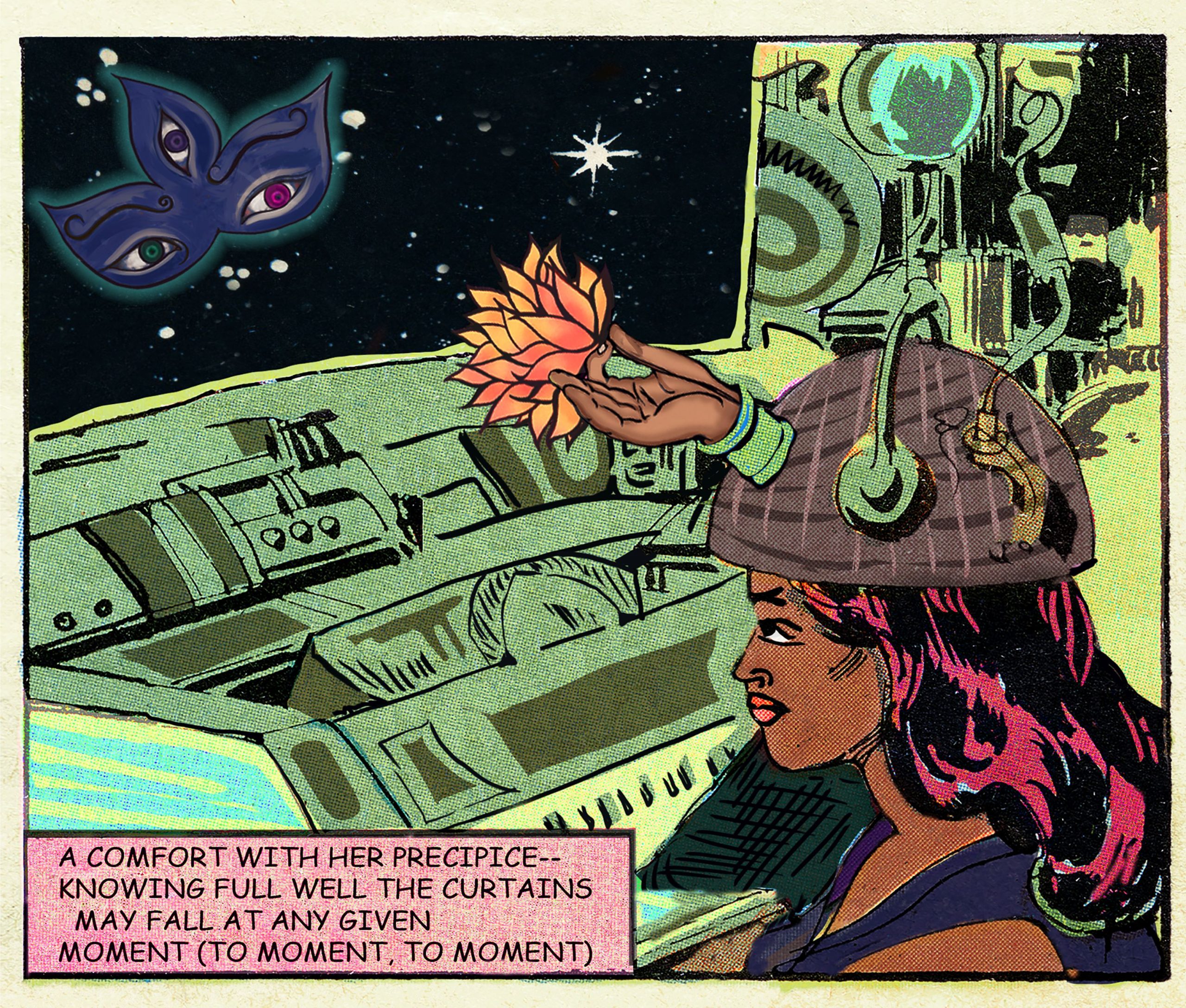
Comfort with Her Precipice, Chitra Ganesh, Kochi-Muziris Biennale, 2018.
Image courtesy Chitra Ganesh, and Gallery Espace.
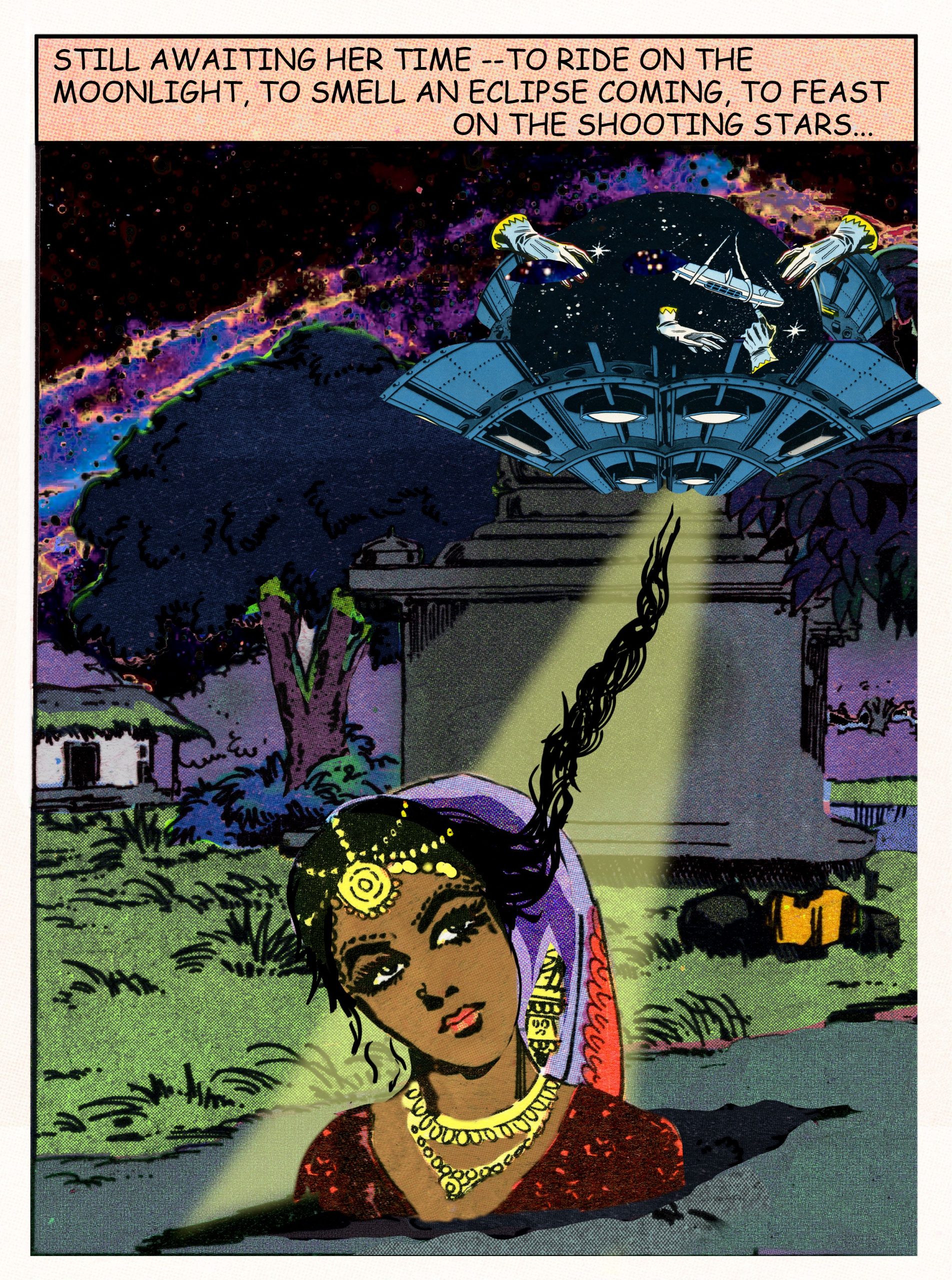
Still Awaiting her Time, Chitra Ganesh, Kochi-Muziris Biennale, 2018.
Image courtesy Chitra Ganesh, and Gallery Espace.
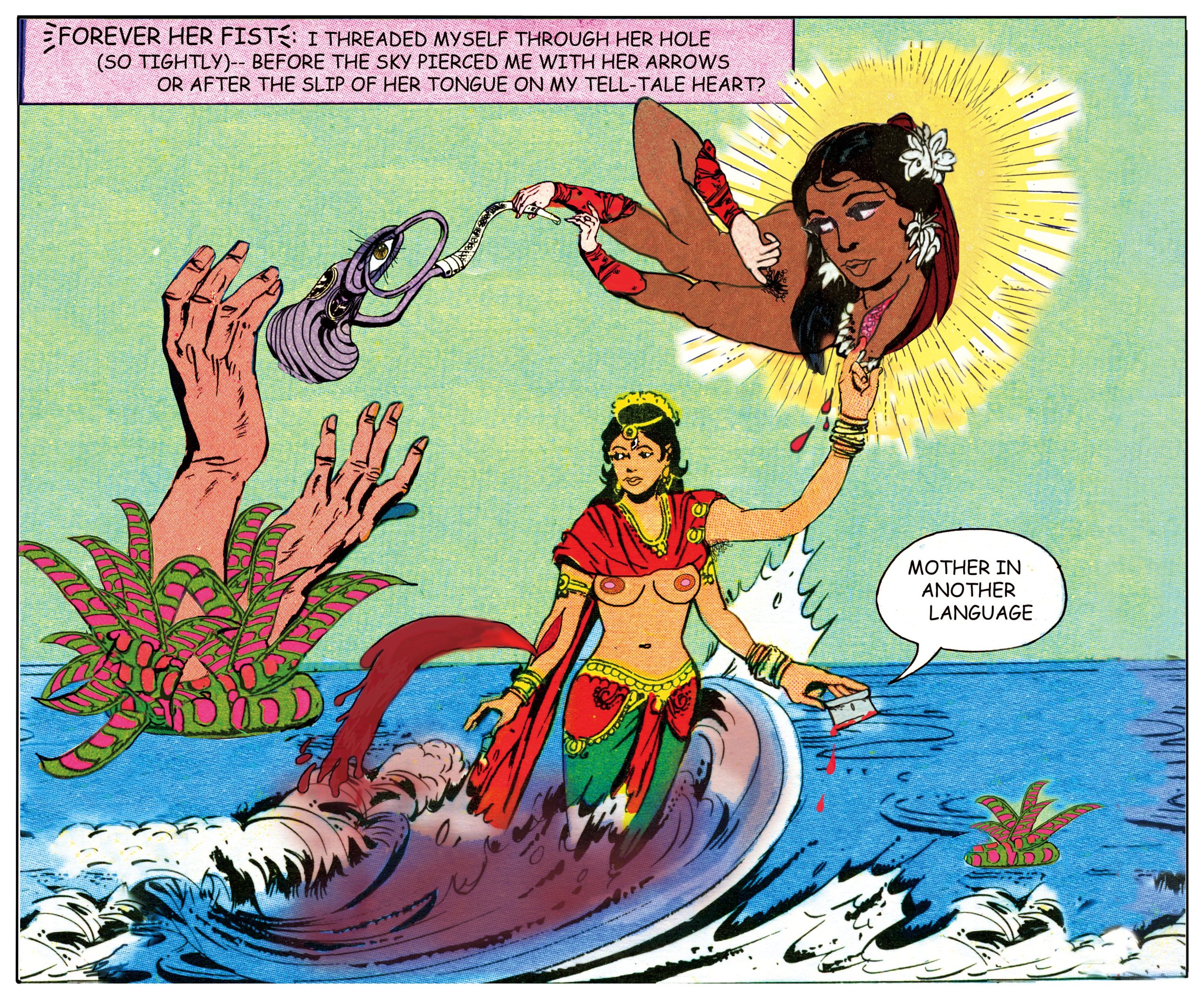
Forever her Fist, Chitra Ganesh, Kochi-Muziris Biennale, 2018.
Image courtesy Chitra Ganesh, and Gallery Espace.
As someone who has been writing about art and culture over the last two decades, I could say that the works of both Gupta and Ganesh have built a narrative that challenges the heteronormative narrative that is built into art, not by insistence but more so by absence and censorship of an alternative testament. The manner in which Bhupen Khakhar and Amrita Sher-Gil have challenged this narrative with their art, in a modern context, both Sunil Gupta and Chitra Ganesh do so in a contemporary context.